












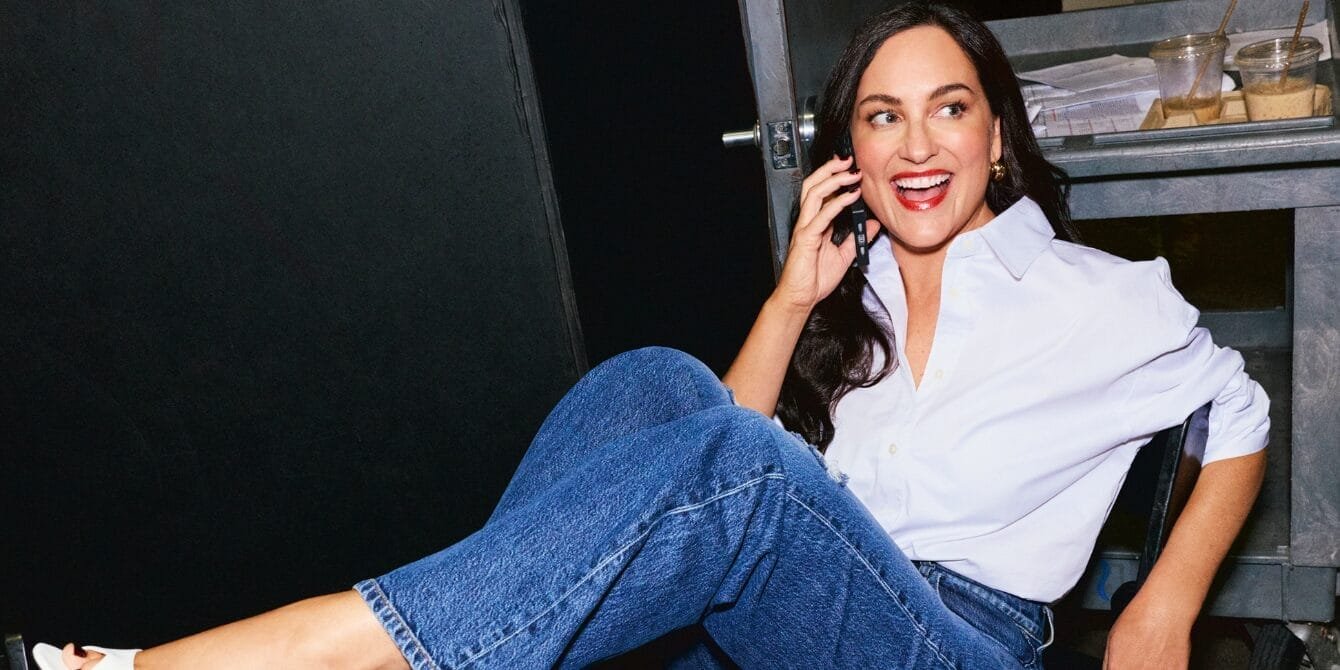
Taylor Strecker has made a career out of saying the quiet part loud. The former SiriusXM morning show host turned podcaster built a devoted following on her show, Taste of Taylor, by being the kind of person who will tell you exactly what she thinks which, over eleven years on air, has covered a lot of ground. She came out publicly in 2017, on her morning show, and spent the years that followed hearing from listeners who said watching her do it gave them the courage to do the same.
Her wife, Taylor Donohue, is the producer and videographer behind the brand, acting as the calmer, solution-oriented counterpart to Strecker’s self-described chaos. Together, they are simply known as The Taylors, which is either a logistical nightmare or a great bit, depending on who you ask.
Their daughter, Beau, was born on New Year’s Eve 2025. She’s the result of three years of IVF, two embryos, one spontaneously scheduled embryo transfer appointment (more on that), and a lot of financial meltdowns. Strecker will be the first to tell you she dragged her feet on the whole thing. Donohue will be the first to tell you she booked the first appointment without asking.
Now five months in, Strecker calls herself Dad, describes her primary role as “the entertainment,” and admits she cannot remember life before Beau. Donohue says she’d get pregnant tomorrow if she could. They are both, by every available measure, completely obsessed.
Explore all articles: Pregnancy and birth guide
We talked to them about the road it took to get here.
When did you both know you wanted to have a child together, and how did you navigate getting on the same page about timing?
Strecker: I always thought I might be someone who never wanted kids, but I knew Teddy was destined to be a mother — and I loved her more than I loved not having kids. I dragged my feet for a long time. We’ve been together 11 years and our baby is five months old, so yeah, a long time. Three years after Teddy did her egg retrieval and we got 2 embryos, I knew I couldn’t drag my feet any longer. Plus I was getting old as hell.
Donohue: Tay was never ready for kids — and honestly, I don’t think I was either. I loved our freedom and figured I’d miss the recklessness of a child-free life. Turns out I don’t miss it at all. If anything, I was getting a little sick of it. It wasn’t until I felt jealous of a pregnant woman at Whole Foods that something clicked. So I kind of just… scheduled the first embryo transfer appointment without asking Tay. She was panicking — but it was the only way to get her on board.
As someone who came out later in life, was there ever a moment where becoming a mom felt like it might not be in the cards for you — or did you always assume it would happen?
Strecker: I was ok with the thought of not having kids, but in retrospect I’m more of a family person than I let myself believe. I’m very close with my parents and siblings and had we not had baby Beau I definitely would have regretted it.
What did the conversation about how to build your family look like? Were there options you ruled out quickly, or did you spend real time weighing them?
Strecker: We obviously had to go the IVF route and thought it would take more time, but Teddy was able to get two good embryos after one round. I’ve agreed to having one baby and maybe another if I don’t have a nervous breakdown.
Donohue: I’d get pregnant tomorrow if I could. Someone out there please talk my wife into having another.
Family-building for queer couples comes with a steep learning curve and often a steep price tag. What surprised you most — the emotions, the logistics, or the cost?
Strecker: The financials nearly broke me — I had more meltdowns than I’d like to admit. Luckily, we worked out a deal with California Cryobank and our IVF clinic, CCRM, so it wasn’t as bad as it could have been. I’m normally an emotional wreck, and I knew pregnant hormones were no joke, so once Teddy was pregnant I made a conscious effort to be the calmest version of myself. If you know me, you know how hard that is. But this was her pregnancy, and I was there to support her, so what surprised me the most was how well I was able to shift from being “the emotional one”, to being the emotional support in our relationship.
Donohue: The IVF protocol felt overwhelming at first, but I got the hang of it quickly. For anyone scared of needles, I promise it gets easier after the first one. And the price tag, while shocking, wasn’t entirely surprising. God bless anyone who goes through multiple rounds to have a child.
I’m a solution-oriented person, so once I have a goal in sight, I put my head down and go. I was all over the logistics — appointments, medications, research, all of it. What surprised me most was how quickly you’re just thrown into the deep end. You go from prepping for motherhood to actually keeping a baby alive, with no real transition in between. Luckily, we have incredible friends and family who’ve helped guide the way.
There’s a kind of exhaustion that comes with having to be so intentional about every single step, when nothing happens by accident the way it sometimes can for straight couples. How did that reality land for you?
Strecker: Straight people get to buy Birkin bags and we have to buy babies. That’s crazy.
Donohue: I tend to see the world through rose-colored glasses… my wife, on the other hand, sees it through poo-colored glasses (see her answer above). And while we definitely had to jump through some hoops, I know how much harder it can be for people who adopt, use surrogates, or go through multiple rounds of IVF. I’m just grateful our journey was relatively smooth.
Your baby is a few months old now. What’s the thing you couldn’t have anticipated — the part no amount of intentionality could have prepared you for?
Strecker: I never anticipated how fun she would be, how much I could love her, how addicted I would be to the way she smells. I really can’t even remember life before her. I’m obsessed!
Donohue: The best decision we made was having our night nurse start the night we got home from the hospital so she taught us both everything from day one. I didn’t expect Tay and I to be so equally hands-on, but it’s made the past five months so much easier. I also couldn’t have predicted how fast and how hard Tay fell in love. A lot of “dads” struggle to connect during the “blob” phase, but Beau melted her from the very beginning.
Did your coming-out journey, and everything that came before it, shape the kind of mother you’re becoming?
Strecker: I jokingly call myself Dad, but I’ve realized that if I were in a traditional heterosexual relationship, I’d have been a stressed-out, miserable mother. Getting to play the stereotypical “Dad” role — I’m thriving. There’s so much comfort in knowing that my wife, who is so naturally maternal, always knows what to do and is such a calming presence for Beau. Quite frankly, I’m just the entertainment.
Donohue: I’ve always felt maternal… a bit of a baby whisperer, honestly. Even when I came out as gay, it never crossed my mind that I wouldn’t have kids someday. Part of me wishes we’d done it sooner, but then we wouldn’t have this exact baby angel.
A lot of queer parents talk about wanting their kids to grow up knowing their origin story — not as a burden, but as a point of pride. Is that something you think about?
Strecker: Absolutely. It’s inevitable that some jerk kid at school will make fun of Beau’s parents, but I’m going to tell Beau to tell them that we wanted her so badly we paid a doctor to help make her and they picked the best egg and the best sperm… so she’s basically perfect, unlike that jerk kid who maybe wouldn’t be such a jerk if his/her parents had done the same.
Donohue: By the time Beau’s old enough to realize having same-sex parents is unique, she won’t know any different. All we can do is talk openly with her and shower her with love. And who knows – maybe kids in her generation won’t even tease about it.
You’re being celebrated in this campaign as a queer mom in a mainstream wellness space. What does it mean to be seen that way — and what do you wish had existed for you when you were still in the thick of sorting it all out?
Strecker: It feels amazing to be a part of Weight Watchers’ Mother Issue The more representation that exists, the more normalized it becomes… if you can see her, you can be her! Over the years I’ve heard from so many listeners whose lives were touched by watching me come out and live proudly, finding the courage to do the same. It’s an honor to be seen that way and I am so proud to be able to do so on this larger stage. Two people in a loving, healthy relationship is the most important foundation you can give a child, and I’m happy to lead by example. Love is love, and family is family.
What makes this campaign especially meaningful is that Weight Watchers is helping broaden the conversation around what health, motherhood, and family can look like today. True wellness isn’t one-size-fits-all; it includes feeling supported, seen, and accepted for who you are. I think that’s something many of us could have benefited from growing up: seeing more families that looked like ours, and knowing there was space for us exactly as we were.